Most DeFi power users have signed a transaction they later regretted. The question isn’t whether errors happen — it’s whether the wallet you use makes those errors visible, interpretable, and reversible before you hit “Confirm.” Transaction simulation is one technical pattern that promises to turn blind signing into deliberate action. This piece unpacks how simulation works in practice, what it protects you from, where it doesn’t help, and how a browser wallet built around that idea changes the decision calculus for U.S.-based DeFi operators, traders, and institutional users.
I focus on a particular implementation of those ideas in the browser and desktop wallet space because that’s where most power-user activity — complex approvals, cross-chain swaps, and contract interactions — happens today. You’ll get a mechanism-first explanation, realistic limits, and a practical framework for when to trust a simulation and when to add additional safeguards.
How transaction simulation works: the mechanism, step by step
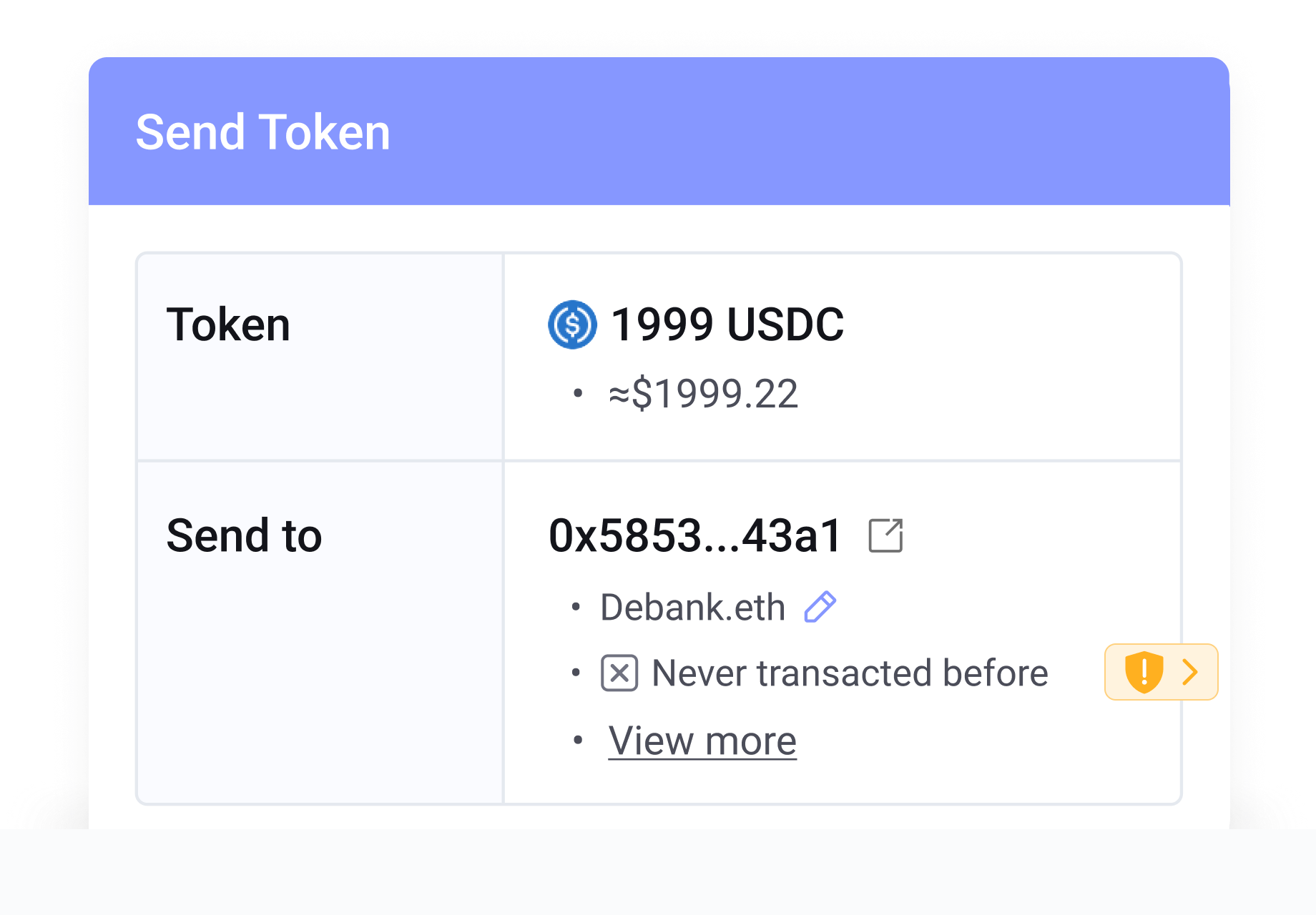
At its core, a transaction simulator runs the transaction against a node (or a local VM) using the same input data a dApp would send to the chain, but without broadcasting it. It then computes the expected state changes: token transfers, allowance changes, and gas consumption. The wallet translates those low-level events into a human-readable summary — for example, “You will swap 1,000 USDC and receive approximately 0.45 ETH; estimated gas fee: 0.0025 ETH.” That translation is the crucial UX layer: raw EVM logs are opaque; a useful simulation surfaces the economic consequences that matter to users.
Mechanics in practice: the wallet extracts the call data and the target contract address, sends a call to a read-only RPC endpoint or a sandboxed EVM, and inspects returned logs and balance diffs. For approvals, it inspects the allowance change; for swaps, it evaluates both the route and slippage impact. A risk engine can then cross-check the contract address against known breach lists, verify that token decimals match expectations, and flag anomalies such as approvals to proxy contracts or zero-address recipients.
What simulations protect you from — and what they don’t
Simulation raises the bar in three concrete ways. First, it prevents obvious “blind signing” where users approve a contract without understanding the immediate transfer or approval effects. Second, it exposes hidden fees and slippage calculations before money moves. Third, when combined with a risk-scanning engine, it warns about known malicious contracts or suspicious approval requests, enabling proactive revocation or cancellation.
But simulation is not a silver bullet. It cannot prevent on-chain front-running after you broadcast a legitimate transaction, nor can it guarantee that the code on-chain won’t change between simulation and execution in rare upgradeable-contract patterns. Simulations reflect a model of the current state; if the state changes — e.g., mempool reordering or an oracle price update — outcomes can differ. Equally important, simulations depend on the accuracy and trustworthiness of the RPC endpoints and contract metadata they use. An attacker who controls the price oracle or spoofs RPC responses can still create deceptive simulations in theory; in practice, reputable wallets mitigate this with multiple data sources and auditability.
Rabby in context: features, integrations, and practical trade-offs
Rabby is a DeBank-built, open-source wallet that foregrounds transaction simulation and a pre-transaction risk engine. It supports over 90 EVM-compatible chains, hardware wallets, and institutional integrations (Gnosis Safe, Fireblocks, Amber, Cobo), and adds operational conveniences like automatic network switching and a gas top-up for cross-chain transactions. Those features are not merely cosmetic: for a U.S.-based power user juggling multiple L2s and rollups, automatic switching and accurate gas estimation reduce operational friction and human error during fast trades.
Where Rabby stands out is the combined stack: simulation + pre-transaction scanning + built-in approval revocation. Simulation tells you what will happen; scanning tells you whether the target contract is suspicious; revocation lets you reduce exposure later. If you want to flip back to your previous wallet, Rabby’s extension includes a Flip toggle for an easy switch. The wallet is open-source under MIT, which helps independent auditors and institutional teams review the code before trusting it with larger balances.
That said, trade-offs exist. Rabby does not have a native fiat on-ramp, so on-ramps through exchanges or third-party providers remain part of the user flow for U.S. residents. It also lacks native in-wallet staking features, meaning active yield strategies still require coordination with external protocols. The wallet’s past incident — a 2022 exploit associated with a swap contract that resulted in roughly $190,000 in losses — is a reminder that even security-focused projects can suffer implementation-level issues. The team’s response (freezing the contract, compensating users, and increasing audits) is a strong signal that governance and remediation procedures exist, but it also shows that simulations and scans must be complemented by robust contract-level practices.
Decision-useful framework: when to rely on simulation, and when to add layers
For DeFi power users the practical question is not whether to use simulation — that should be baseline — but how to layer other controls. Here’s a short heuristic:
– Low-value, routine trades on well-known AMMs: simulation + hardware-wallet signing is often sufficient. The ROI of extra steps is low.
For more information, visit rabby.
– Large trades, custom contract interactions, or approvals for new contracts: add multi-sig and institutional custody (Gnosis Safe, Fireblocks). Simulations here are necessary but not sufficient; require a time-delay or multisig threshold to allow off-chain review.
– Permissioned or enterprise flows (treasury operations, payroll): use simulations for visibility, but mandate out-of-band verification (signed approvals by legal or compliance) and integrate with enterprise custody providers. Rabby’s integrations with Safes and custody platforms make it convenient to fit into such workflows.
Where simulation could fail you and what to watch next
There are three practical boundary conditions to monitor. First, leave time between simulation and broadcast for potential mempool manipulation risks; if a front-run opportunity exists, consider tools that submit at favorable times or use private relayers. Second, confirm that the wallet’s RPC endpoints and price feeds are diversified; a single-point data source raises systemic risk. Third, never equate simulation with formal auditing: simulations show expected behavior, audits assess code correctness and invariants.
For U.S. users, regulatory and compliance signals matter too. Institutional adoption will likely emphasize multi-sig, custody integrations, and audit trails — features Rabby already supports to a degree. If regulatory scrutiny increases around “software that facilitates transfers,” open-source status and transparent remediation after incidents will become practical advantages for teams that need to demonstrate governance and control.
For hands-on readers who want to explore the wallet’s approach, the project page provides installation and technical details; see rabby for direct access to the project resources and downloads.
FAQ
Q: How reliable are pre-transaction risk warnings in preventing hacks?
A: They materially reduce exposure to known threats — flagged hacked contracts, suspicious approvals, and zero-address recipients — but they don’t eliminate all risk. Warnings rely on lists, heuristics, and observable contract patterns. They can’t detect zero-day vulnerabilities in otherwise legitimate contracts or off-chain oracle manipulation that occurs between simulation and execution.
Q: If a simulation shows an outcome, can the executed transaction differ?
A: Yes. Simulations model the current on-chain state. Differences can arise from mempool reordering, price oracle updates, or synchronous state changes by other actors. That’s why high-value operations often add time locks, private relayers, or multisig approvals to create operational buffers.
Q: Does open-source mean the wallet is safe?
A: Open-source increases transparency and the potential for community audits, but it’s not a guarantee. Security depends on code quality, audit frequency, and how quickly maintainers patch issues. The 2022 exploit tied to a Rabby-associated swap contract illustrates that open-source projects still require active security governance.
Q: Should institutions use a browser extension for treasury operations?
A: Browser extensions are convenient but carry endpoint risks. For institutional treasury, prefer a hybrid architecture: hardware wallets, multi-sig flows, enterprise custody integrations, and signed audit trails. Rabby’s compatibility with Gnosis Safe and custody providers makes such hybrid setups feasible.
Takeaway: transaction simulation is a powerful defensive layer that converts opaque contract calls into actionable economics. For DeFi power users in the U.S., it should be part of a layered approach: simulations plus hardware signing, approval revocation, multi-sig for large/value operations, and diversified data feeds. No single tool will remove all risk, but the combination of simulated visibility and institutional-grade integrations meaningfully raises the cost of mistakes — and that matters every time you sign a transaction.